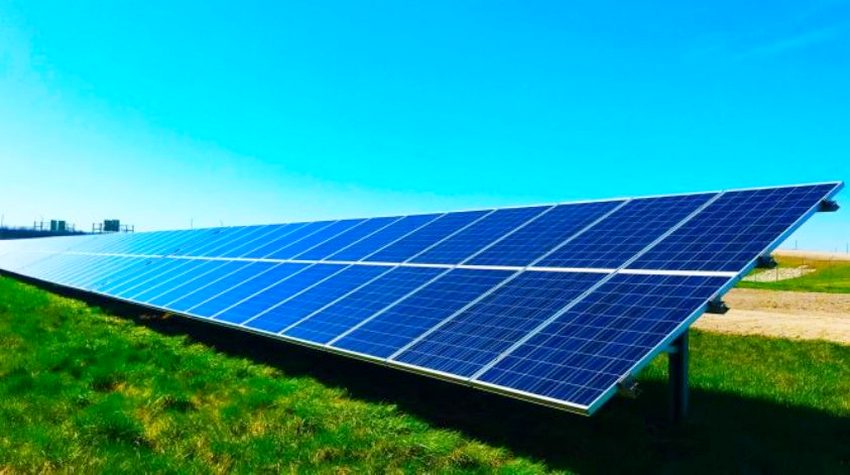
Although sunlight is widely considered the best friend of solar panels, high temperatures actually have a negative effect on them, Engadget reports.
Manufacturers test and rate solar panels at a standard cell temperature of 25 degrees Celsius, with irradiance of 1,000 watts per square metre.
Cold weather technically improves efficiency because electrical voltage decreases as temperature rises. However, greater efficiency in cold conditions does not necessarily guarantee higher overall electricity production, as hot summer days often bring significantly more hours of sunlight.
The first challenge is that the temperature shown in a weather forecast does not reflect the actual heat of the panel itself on a rooftop, Nezavisne novine reports.
Sandia National Laboratories, part of the U.S. Department of Energy, models module temperature by taking into account outdoor air temperature, solar irradiance, wind speed and the way the panel is mounted.
As soon as the cells heat up above the reference temperature of 25 degrees Celsius, their power output begins to decline according to the model’s temperature coefficient.
For example, REC Group reports a decrease of 0.24 percent per degree Celsius for its Alpha Pure-RX model, while Qcells reports a decrease of 0.29 percent for its Q.TRON BLK M-G2+ series. This is an important factor for buyers in warmer regions.
This does not mean, however, that 25 degrees Celsius is the upper limit of the panels’ operating range. According to Qcells data, its Q.TRON model can safely operate at temperatures of up to 70 degrees Celsius, while REC Group states that its Alpha Pure-RX module can withstand temperatures of up to 80 degrees Celsius.
The U.S. Department of Energy, however, warns that extreme heat can permanently damage solar cells and other materials within the module, shortening their lifespan.
As a result, the seemingly simple question of whether hot or cold weather is better becomes more complicated, as clouds, snow, roof orientation and the angle of the Sun can play a much more important role in electricity production.
For this reason, peak electricity production does not necessarily occur between 10 a.m. and 4 p.m., nor are the summer months universally the best.
To prepare for periods when conditions are less than ideal, some homeowners follow the 20-percent rule and design systems that can produce more electricity than they actually need.
For more precise calculations, the free online PVWatts Calculator, developed by the National Renewable Energy Laboratory, allows users to enter a location and receive an estimate of monthly and annual electricity production based on 30 years of actual weather data. This demonstrates that there is no single universally ideal month or time of day for solar energy production.
 Privreda
 Energetika
 Turizam
 Poljoprivreda
 ICT
ICT Prehrana