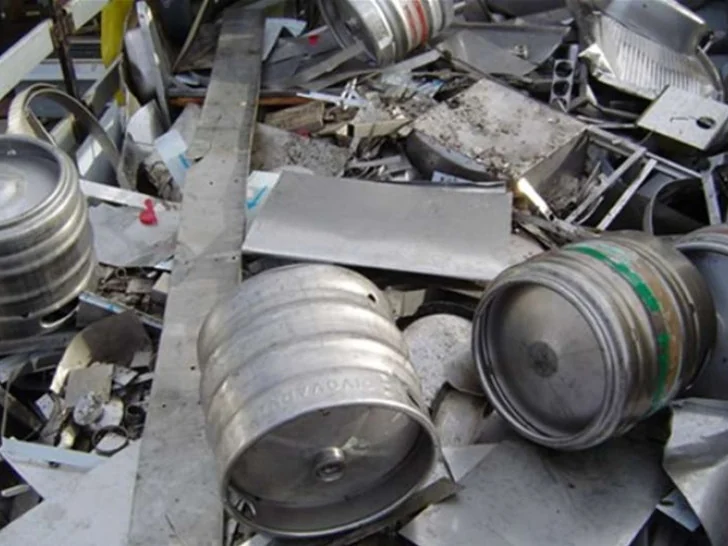
The potential exclusion of ferrous and non-ferrous metal waste from the categories of waste that Bosnia and Herzegovina is permitted to import from the European Union could make it more difficult for domestic processors to secure secondary raw materials, increase production costs and reduce the utilization of existing production capacities. For this reason, businesses are calling on Brussels to take the needs of domestic industry and the potential consequences for its operations into account before making a final decision.
The European Commission is considering allowing Bosnia and Herzegovina to import paper, rubber, textiles and waste used as alternative fuel under the new rules on cross-border waste shipments, while excluding metal scrap. This concerns the new EU Waste Shipment Regulation, which tightens the conditions for exporting non-hazardous waste to countries that are not members of the OECD.
The Foreign Trade Chamber of Bosnia and Herzegovina has warned about the potential consequences of such a decision. At the request of companies operating in the recycling industry, the Chamber has taken part in the European Commission's public consultation, calling for the proposed exclusion of metal waste to be reconsidered before a final decision is made, Glas Srpske reports.
Businesses Call on Brussels to Reconsider the Restrictions
The Chamber points out that preventing the import of ferrous and non-ferrous metal waste could restrict access to secondary raw materials, reduce the utilization of existing processing capacities and make it more difficult for companies connected to the European market and its value chains to operate.
“An absence of comprehensive data or detailed information should not automatically imply that private recycling companies fail to comply with environmental requirements or lack the capacity to manage waste responsibly. It is necessary to clearly distinguish between shortcomings in data availability and reporting and the actual conditions and environmental performance of individual private-sector recycling facilities,” the Chamber stated.
It also emphasizes the need for a proportionate, evidence-based approach, allowing companies to submit additional information about their technical and operational capacities, as well as their compliance with environmental standards.
According to data from the Agency for Statistics of Bosnia and Herzegovina, imports of ferrous and non-ferrous metal waste amounted to 8,115 tonnes in 2023. Of this amount, 1,448.15 tonnes, or 17.8 percent, came from the European Union. At the same time, Bosnia and Herzegovina exported a total of 965,381 tonnes of selected waste streams that year, while imports amounted to 29,566 tonnes.
Domestic Raw Materials Cannot Fully Replace Imports
The extent to which potential restrictions could affect the domestic economy will depend on the degree to which individual companies rely on imported raw materials, as well as their ability to replace them with supplies from the domestic market.
Boško Borojević, Secretary of the Sectoral Associations at the Chamber of Commerce of Republika Srpska, told Glas that domestic collection of metal scrap could partially replace imports, but would not be sufficient to ensure the required quantities, quality and continuity of supply.
“The European Union accounted for 17.8 percent of total metal scrap imports into Bosnia and Herzegovina in 2023, although the level of dependence on imports may vary considerably from one company to another,” Borojević said.
Regarding compliance with environmental standards, he believes that the situation cannot be generalized, as individual companies have different capacities and operating conditions. However, he stressed that companies are investing in environmental protection and operating in accordance with the prescribed requirements.
He warned that potential import restrictions could affect raw material procurement costs and the operations of certain processing companies. However, without precise data on their dependence on imports, it is not yet possible to determine the specific consequences for production and employment.
“Companies that rely heavily on imports of metal scrap from the European Union could be affected. In the event of an unfavorable decision, possible alternatives would include greater use of domestic secondary raw materials and finding other suppliers. Nevertheless, the priority should be to continue dialogue with European institutions in order to find an acceptable solution for domestic industry,” Borojević emphasized.
He added that the range of products that can be obtained through metal scrap processing is very broad and depends on the type of waste, as well as the business activities and production processes of individual companies.
While some companies melt metal scrap and use it as raw material for new products, others process it mechanically and subject it to further processing. As a result, the consequences of potential import restrictions will vary from one company to another.
The European Commission's final decision is expected by November 21. The outcome of this process will also determine the conditions under which domestic companies will be able to obtain metal scrap from the EU in the future for their production and recycling operations.
 Privreda
 Energetika
 Turizam
 Poljoprivreda
 ICT
 Prehrana